A tribute to Martin Parr
A tribute to Martin Parr written by HPPH member, Kath Mckay
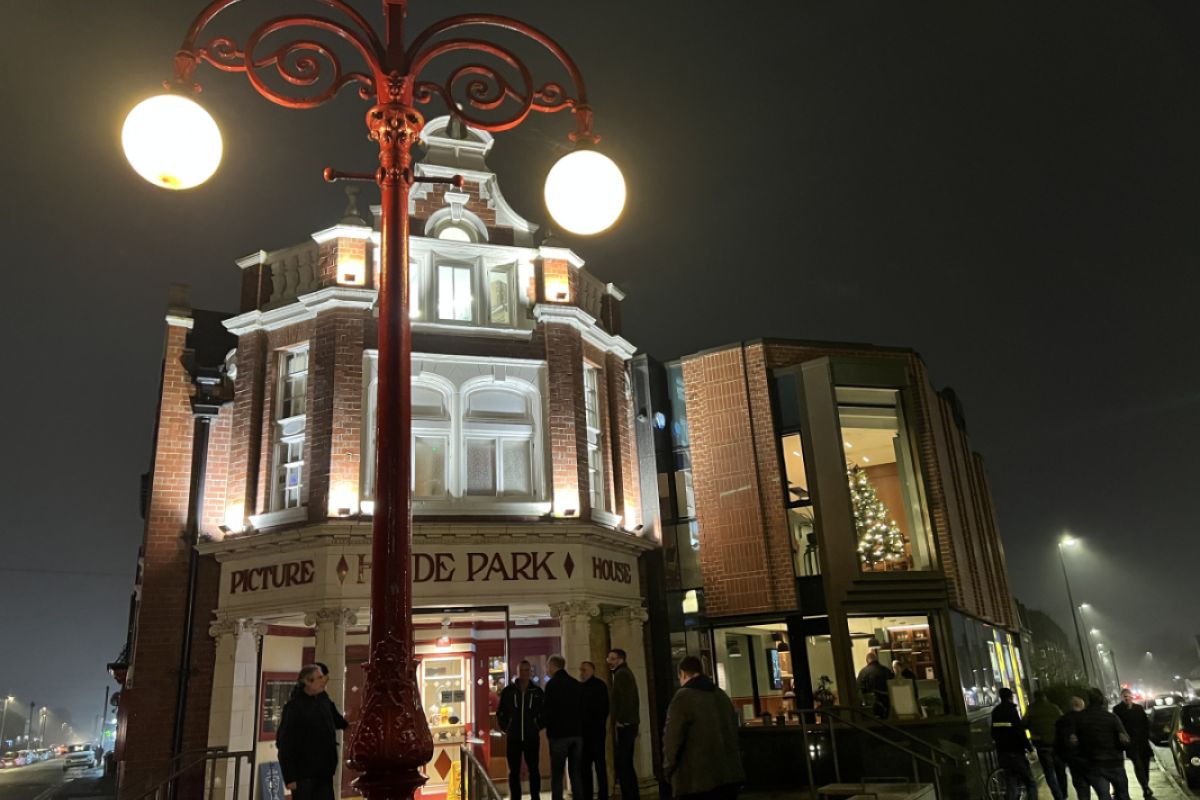
I came to the Martin Parr event at the Hyde Park Picture House on 20 October, when he talked about his new book, Utterly Lazy and Inattentive, and his life in photography. There was a packed audience of all ages, with long queues for the book signing. And now he’s dead, and we’ll have no more Martin Parr photos. But what a legacy he’s left.
I attended the event with my daughter-in-law and her dad, both keen photographers. He, excited as a child, clutching the book, made a beeline for Parr in the crowded foyer before the event: ‘I love your work. Can I shake your hand? And can I buy you a vegan chocolate tiffin? I recommend them.’ Without missing a beat, Parr shook his hand, smiled and said ‘I think they might give me one.’ I loved that ‘might’- such a Martin Parr touch.
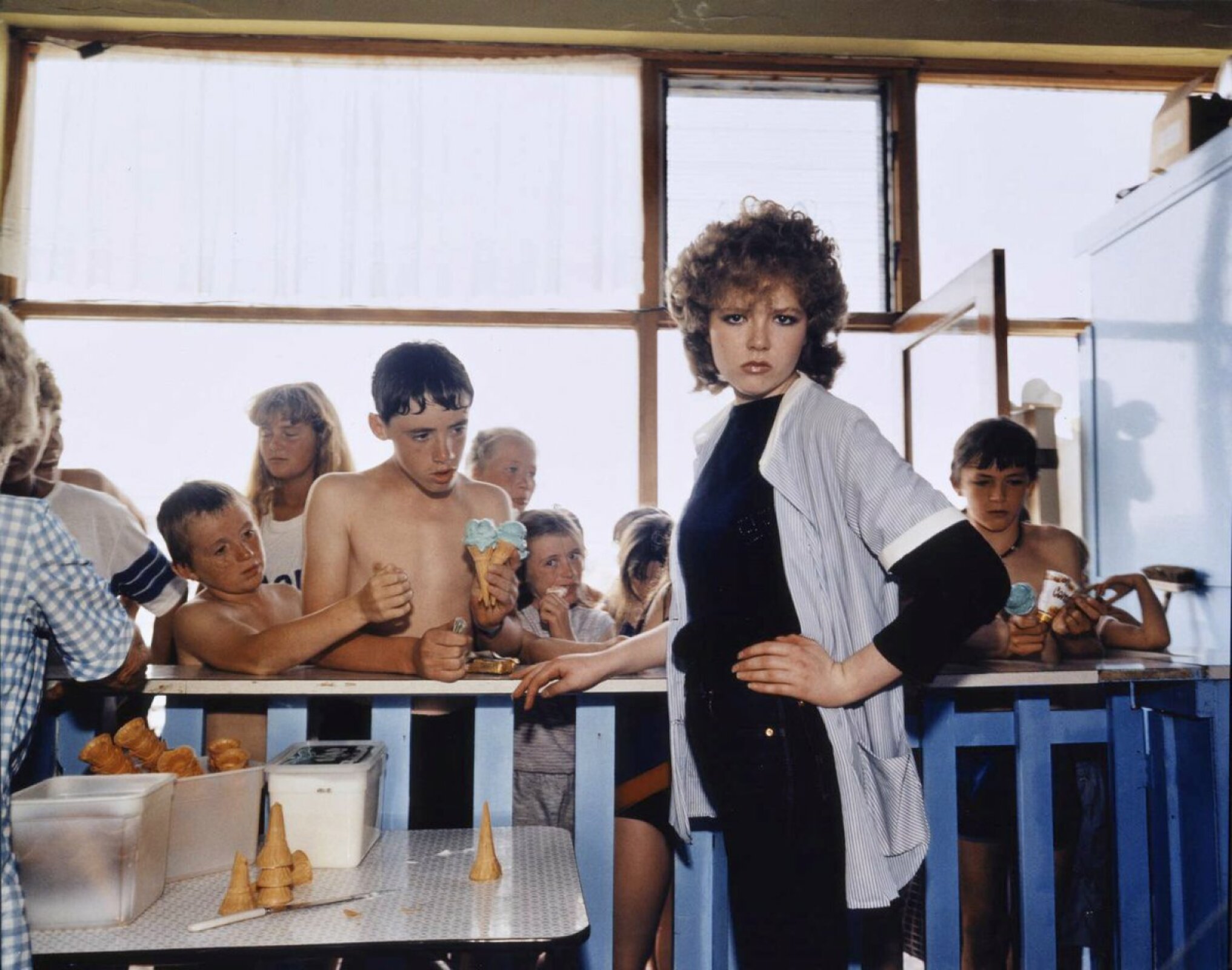
I first came across Parr’s work through The Last Resort, colour photos of working class people on holiday in New Brighton. Coming from Liverpool, I had gone on days out to New Brighton as a kid. I recognised the faded glory, felt the wind off the Irish Sea and the sun burning our freckled faces as we ate chips and ice creams. I recognised these people, I had grown up with them. In one photo, a young ice cream parlour worker with attitude outfaces Parr. A woman eating chips with her family, next to an overflowing bin, proudly displays pristine white trainers. And his photo of four women and a naked toddler with his feet in the water made me catch my throat. Such love in the mother’s gaze, reminiscent of a religious pietà, such affection between the women as an older woman on the left passes over a Milky Way to one of the three young women dressed in white (a mother, aunts, grandmother?) as they cluster protectively around the child. Parr had trained his eye over the years to select details that make his best photos resonate on different levels, creating meaning.
So, I was surprised when I heard critics protest his depiction of the working classes and thought they’d missed the point. I turned to Flannery O’Connor, a great short story writer, to remind me that fiction (like photography) requires you show ‘not of what we ought to be but of what we are at a given time and under given circumstances; that is, as a limited revelation but revelation nevertheless’. (O’Connor: Mystery and Manners).
And so, Parr turned attention to the middle and upper classes. As Grayson Perry, Parr’s friend, said after his death, ‘Like me, Martin was an equal opportunity piss-taker.’ One example was focusing on a sign at a church fete next to cling-filmed cheese and cucumber sandwiches to ‘Please do take ONE cherry tomato’.

I came to Parr out of order, only stumbling across ‘The Non-Conformists’ photos after I’d moved to Yorkshire. His 1970s black and white photographs of a disappearing way of chapel-centred life around Hebden Bridge, before it became a libertarian oasis, fascinated me. With its ‘fastest mouse’ competitions and ‘Society of Hen pecked husbands’, its full table of sandwiches and scones at the inauguration of a mayor, this was a world where men still wore suits and women summer print dresses and hats, so different to the later bright colour of The Last Resort.
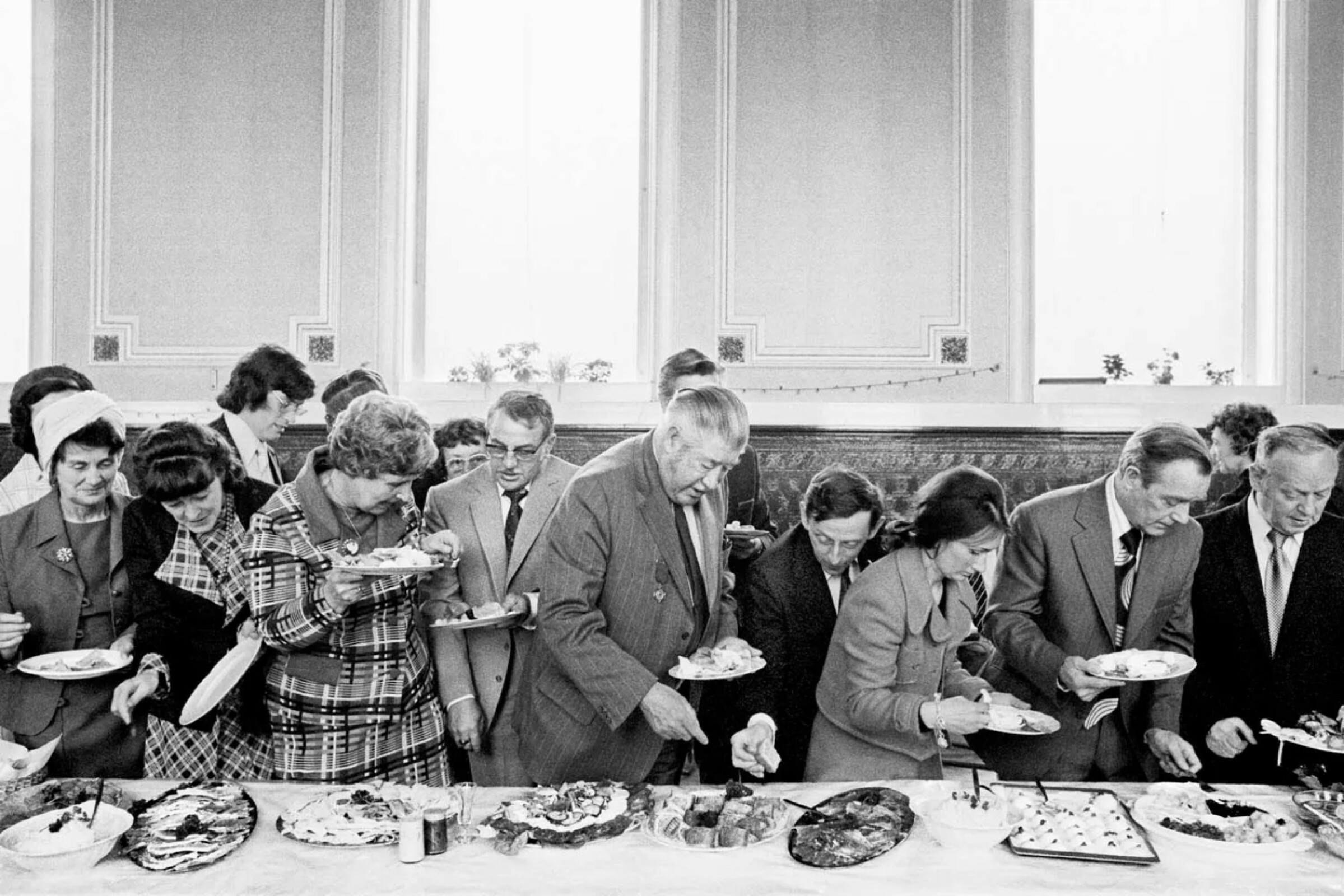
But that was him -always experimenting, keeping up with changes in technology and techniques, but concentrating on the human. And so I kept an eye on him over the years, viewing exhibitions, and noting with interest how he was feted in Europe, America and Japan, with his death making the front pages in France, yet some UK critics still mealy-mouthed about his work.
Quietly subversive in his Marks and Spencer jumpers, with his mild manner, he kept his gaze outward, documenting mass tourism, food, overconsumption, class divisions, our overheating world, and leisure pursuits, always fascinated by people, their rituals, habits and idiosyncrasies.
At the Picture House, he was both very funny and deadly serious. He recounted watching people walk across stepping stones at Bolton Abbey from both sides of the river, with no room to meet in the middle: ‘People are very odd.’ And I loved that, unable to swim, he bought and used an underwater camera. And the childhood holidays to obscure beaches with his bird-watching parents instilled both a love for overlooked places and a burning desire to visit Blackpool.
And what a great example he showed us of the work ethic needed to produce anything worthwhile. Advising a photographer, he said how he might have to take hundreds of photographs a year to get ten good ones. But, early on, he learnt the importance of archiving and cataloguing his work. Through the Bristol-based Martin Parr Foundation, set up to support UK and Irish-based ‘emerging, established and overlooked’ photographers, the Foundation has been able to help many other photographers, and help promote photography.
So here’s to the man who found the perfect bald patch at the back of someone’s head, as fascinating as the snatched photo of a rosy-cheeked North Korean baby peeping over the shoulder of a soldier on a highly regulated tour, to the almost fully clothed sun worshipper lifting her face to the sun on a Russian beach. And the Martin Parr Foundation is exhibiting The Last Resort again in February. To read the most generous of tributes by friends and fellow workers, which detail the support he gave to others, go to their website.
He saw us, he snapped us, and he helped make us see. I am so grateful we had the privilege of seeing him in the Hyde Park. Such a fitting choice. Thank you.
By HPPH member, Kath Mckay.
Kath Mckay writes short stories, novels and poetry. Her latest book is Moving the Elephant.