-landscape.jpg)
Lonely girls on laptops
An interview with writer/director Sophy Romvari (Blue Heron)
Wendy Cook
The first image in Blue Heron is of somebody taking a video on their iPhone; your short films are very much about processes of documentation. Is there a way in which your first feature is an extension of its predecessors?
I think that my shorts were an integral part of honing my instinct and figuring out which modes I like to work in, but Blue Heron is the first time I feel like everything is intentional. Even with the documentary elements, I still wrote a script with some idea of what might be said. I didn’t want to leave things up to chance. Of course, sometimes you have to pivot and that’s part of the excitement, but getting to do a feature is a privilege and I didn’t want to get all these people together - and all this money - and then go and find something in the edit. I wanted to be able to stand behind my decisions and say, “I made these choices on purpose, and in collaboration.” It feels very different to me for that reason.
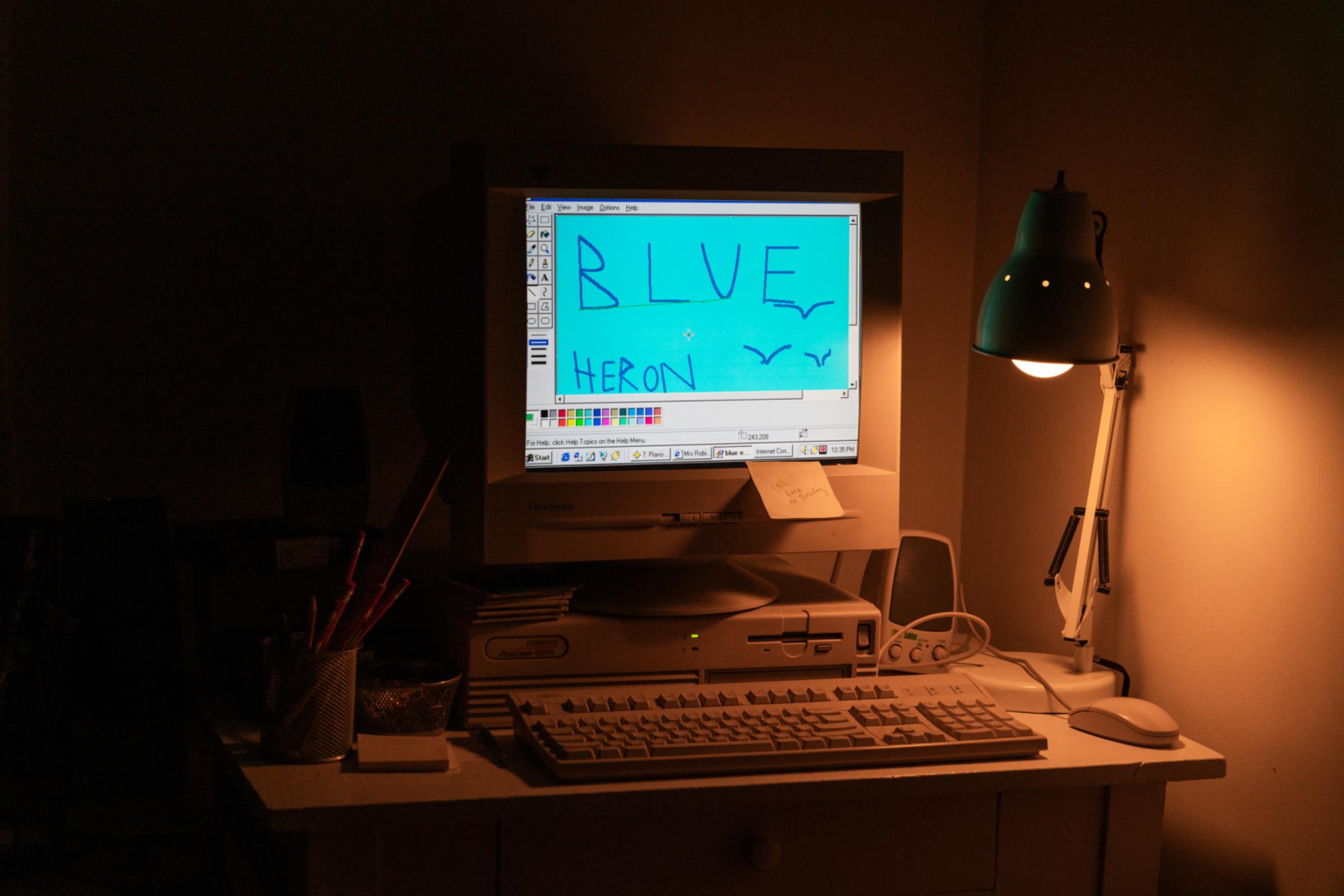
There’s obviously a connection between Still Processing and Blue Heron in terms of autobiography; they’re both pieces about memory.
I’ve been known to call my short films the “lonely girls on laptop” series; the continuity isn’t intentional, but it has something to do with how we repeat ourselves as filmmakers. We do things without realising it. Screens are obviously a part of that for me, and the fact that the movies are about recording connects to my trouble with memory. I really struggle with memory and the specificity of it. I question my own memories all the time. I doubt them. So Blue Heron is about trying to remember; but also accepting the fact that I can’t – not really. You can re-create the memory, but it’s fading and hard to grasp onto. I realised while making the movie that it wasn’t about accuracy – it’s more like a simulacrum, which is why I consider the movie a work of fiction. The iPhone, the videos, the voice memos, the photos… those are like a form of supplementary recall.
Where do you think that impulse comes from?
I think that the desire to document things comes from my dad, who was always photographing us. We were the subjects of his art. It made me comfortable with the concept of film-making, and I think it drew me towards it. Even when he interacted with us at a distance, he was there, behind the camera.
The different modes of objective documentation in the movie are juxtaposed with Jeremy’s hand-drawn maps, which are very detailed and precise but also completely subjective… they’re mapping a fantasy space.
Jeremy is based on my brother, and, like my brother, he’s a mystery. The maps he makes point to that – to an inner world we never quite access. That’s true to my experience of my brother and the difficulty of representing the sort of person he was. He was so phenomenally unique. The best I felt I could do was emphasise the mystery and remove his voice from the film. He doesn’t have a lot of dialogue. I think he has two lines in the whole movie. One is “I think there’s a lot of things you don’t remember” which might be the thesis of the movie. We learn a lot about Jeremy but it’s all from other peoples’ perspectives; the only thing we see from his own point of view are those maps. This abstract world he inhabits has a lot more going on in it than we can ever see. That’s also a big theme of the movie: that you can never see everything that’s really going on with another person. You find things out later and piece them together.
There’s an important moment near the end of the movie where Sasha gets to see her brother through another person’s eyes…
The letter at the end of the movie is based on a real message I received, and it was a profound moment in the development of the script. I was so deep into the process and then this email arrived out of the blue from somebody who had known my brother in high school. The email in the film is a truncated, edited version of that. I think it was the first time I had ever heard someone talk about my brother that wasn’t a medical diagnosis or an observation from an adult – or from my parents. It moved me to no end. It was devastating because it sort of… humanised him in a way I hadn’t been able to experience as a sibling. I was growing up with so much anger and frustration at this person who just could not let up and then to hear from somebody else who experienced him through another lens – it was beautiful.
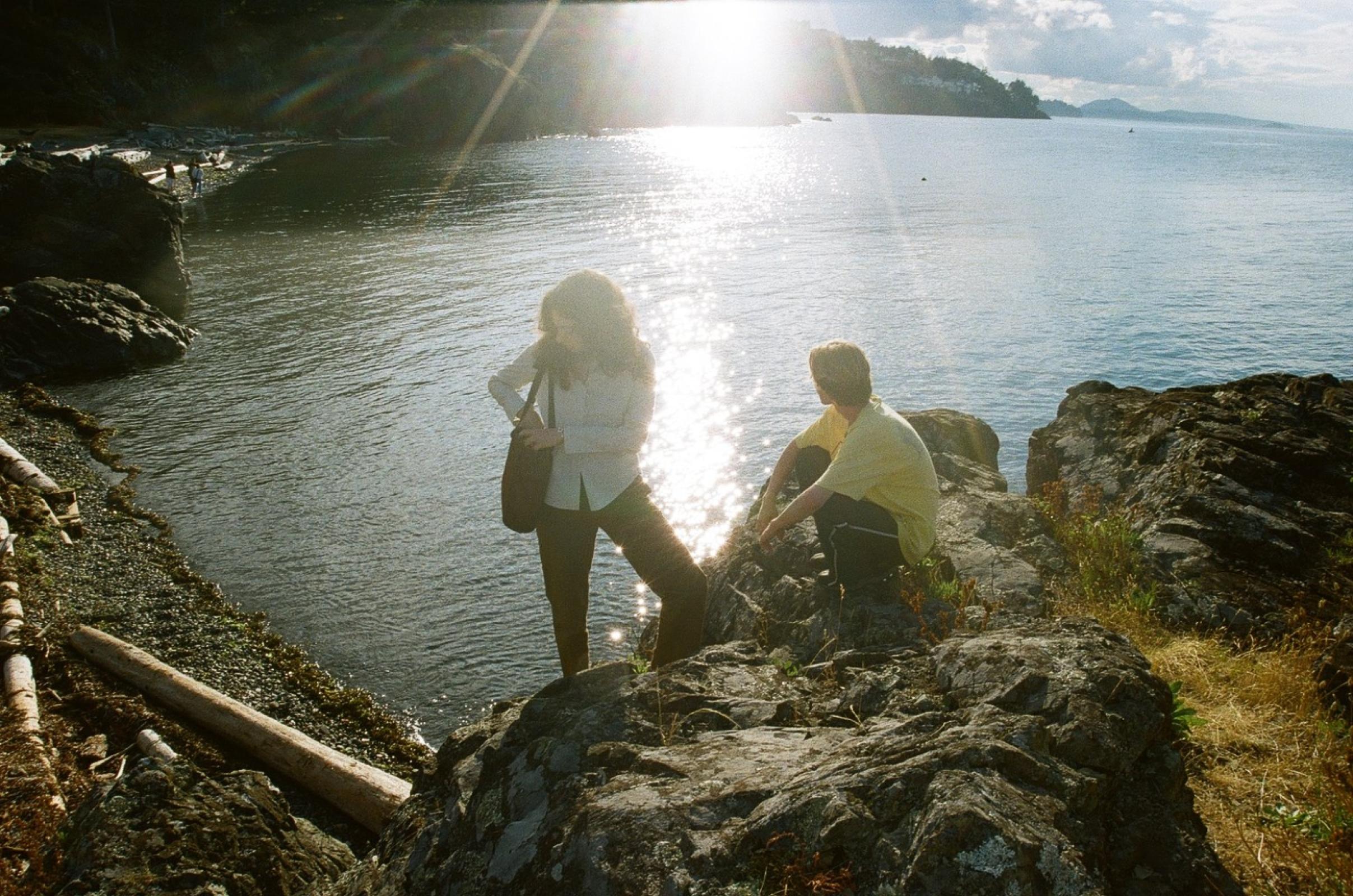
How much research did you do about social work before writing the screenplay?
There was a lot of research in terms of social work. It was important to me that the movie be honest about this aspect. I often have an impulse to try and get some kind of consensus of truth to help me understand things, and I get foiled because there’s no such thing. Here, I had a real desire to get to the bottom of something. I grew up watching my parents try to understand what they could do for my brother and that became part of my process too. I spoke to psychologists, psychiatrists, and social workers. One person I spoke to was studying siblings of family members who had experienced severe mental crises and the impact of growing up in those situations, whether the issue was oppositional-defiance disorder, schizophrenia, or other extreme mental impairments. He told me candidly that one of his children behaved very similarly to Jeremy in the film, and to how my brother had been. Here’s this guy who works at some pinnacle of understanding these issues and he couldn’t do anything about it, either. That was very validating, to hear it from doctors and academics and professionals. The consensus was that it’s hard to understand children and teenagers who are in these situations – and hard to raise them. It’s beyond the capacity of institutions, even, and it ends up getting left to families.
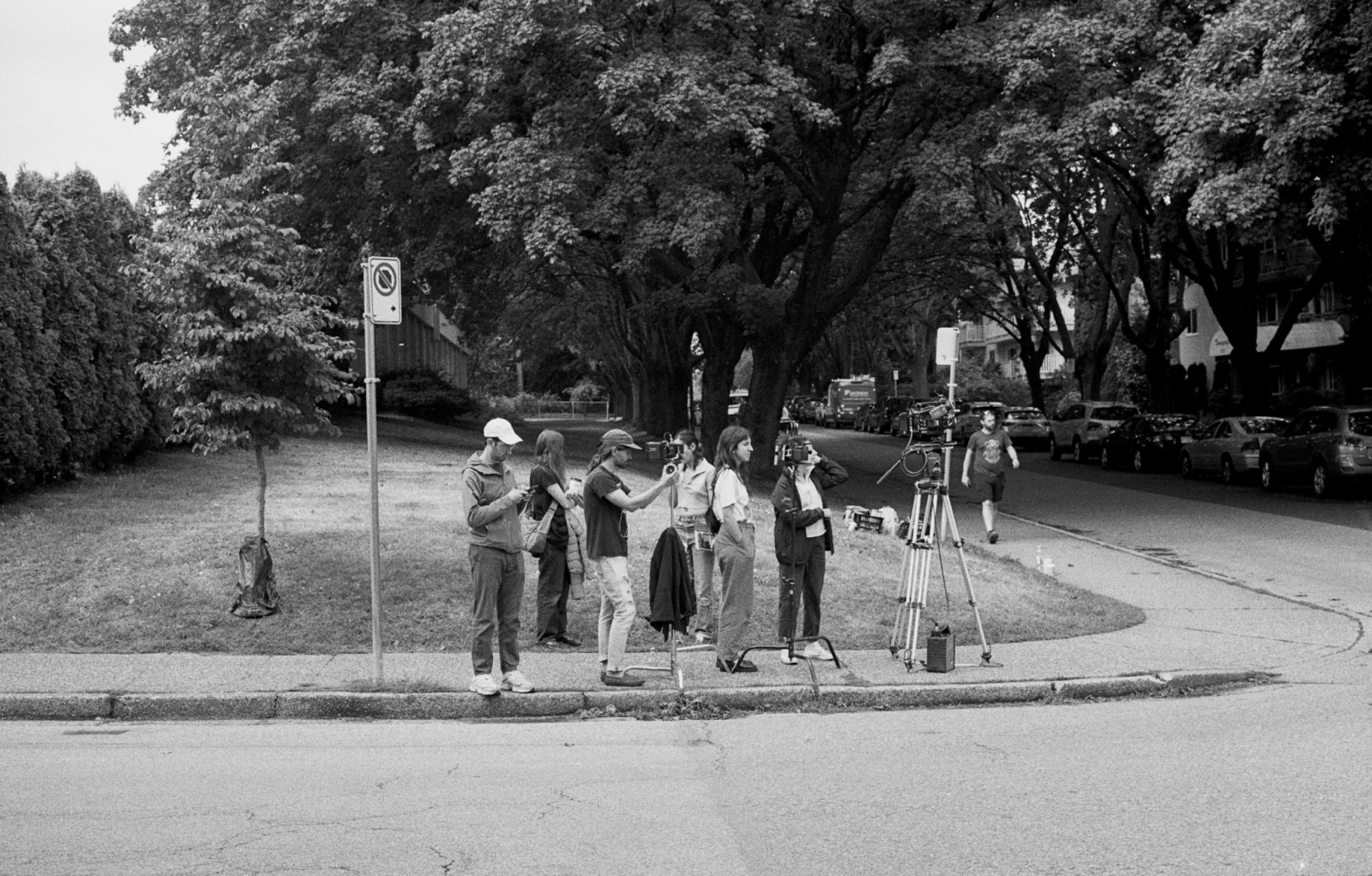
The group conversation sequences seem very authentic; how were they achieved?
My producer, Sara Wylie, comes from a documentary and activism background and she did a number of interviews and extensive research alongside me. We visited youth centres and drop-ins in East Vancouver and got a lot of great feedback on the project to make sure what we were representing was authentic. So, we recruited some of the people we talked to in those places for group discussion scenes in the film. That conversation was unscripted and was overall three hours long. Amy (Zimmer) was incredible in that regard: she was thrown into the mix as an actor, but she had done her own research and guided that conversation. We shot with three cameras, and I was sliding notes to Amy with suggestions of where to take the conversation. She managed beautifully and I think that comes from her comedy background, the ability to just improvise.
Can you talk more about Amy and the challenge of casting somebody to play a version of yourself?
There was a very long casting process for every character but finding adult Sasha was very difficult. I felt some pressure that I should play the part myself. I didn’t want to do that. I wanted to just direct the movie. In retrospect, I am so glad that I am not in the movie, it allows me to actually enjoy watching it! She really connected to the character of Sasha, and has a naturalism in a way that I could not find in anybody else. When we met, we clicked right away. She was so moved by the script. Her audition was held over Zoom, and she essentially pretended she was me, interviewing a social worker, played by Sara Wylie. She played me so convincingly. It was bizarre! She talked about her parents’ immigration from Hungary, she was able to navigate the story seamlessly and take these curveballs Sara was throwing at her about ethics, it was very impressive. So, the character really became me plus Amy plus Sasha. And when I watch the film, that is what I see, this hybrid character. It’s so much more open to me than if it was just me.
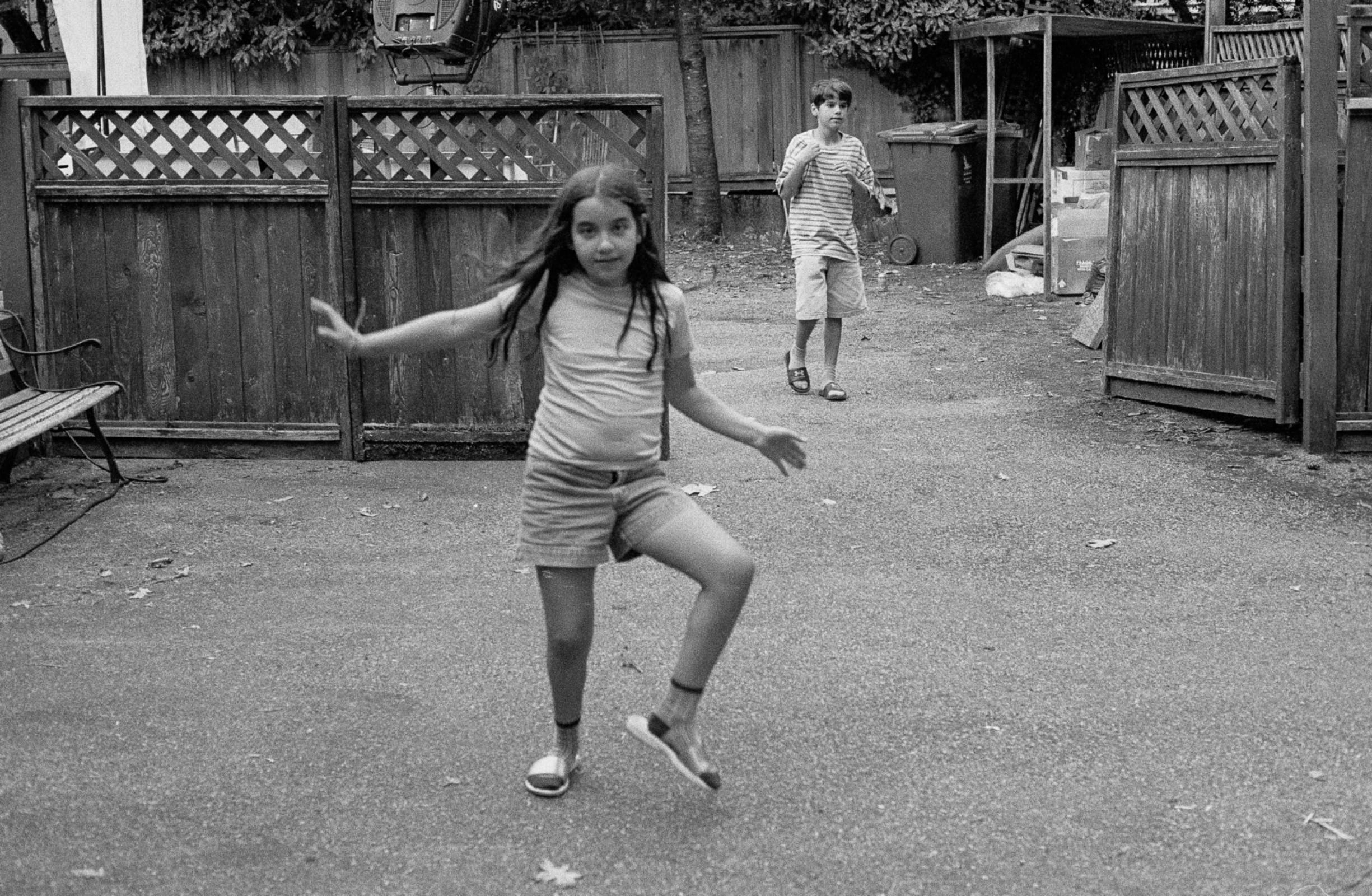
What about Edik Beddoes who plays Jeremy?
It was a tall order. The whole casting process took over a year. We had an incredible Hungarian casting director, Hermina Fátyol who found the parents, and then a street casting company in Vancouver called VAKA, as well as a more traditional casting director local to Vancouver, Angela Quinn. Obviously in a movie that’s about faces the casting was essential. But with Jeremy – I wanted him to feel different from the rest of the family, since he's half-sibling. Edik was 100% street cast. I saw a thirty second clip of him talking about playing video games that VAKA captured - actually, for an entirely different project - and thought he was interesting. I interviewed him and he had this gentleness and mystery. He really connected to the character through some of his personal experiences, but had zero acting experience. It was a big risk, but I’m so blown away by his presence in the film.
Where was the film shot?
We filmed everything in British Columbia, mostly North Vancouver standing in for Vancouver Island. That’s where the house is. The beaches and the mountain at the beginning are specific to the island so we did some exteriors there. Finally, Vancouver gets to play itself!
Blue Heron is very much a period piece…
My Production Designer Victoria Furuya is a saint. It's very difficult to do a period piece on a low budget, even the 90s pose a significant challenge. We had to focus on key elements, like the family’s car, and their computer to help sell the period. Victoria studied all of my family photos for inspiration and accuracy. She has such an incredible attention to detail from colour, texture and a true sense of naturalism. Our costume designer, Maria Katarina, was also so meticulous. She refused to just get things from H&M that were in a throwback style. Everything felt like it had character – like it had been handpicked from a thrift store. The class indicators had to be subtle. We didn't show the family was poor in cliche ways; there was a sense of style that came out of intention. My mom loved to dress me up and did so without a lot of money, and Maria followed suit as inspiration but also out of necessity!
What did Maya Bankovic bring to the project as a DP?
She literally made my dreams come true. Her vision, her sense of collaboration, her attitude, her curiosity, her flexibility – she brought the movie a sense of naturalism and life that I think was so necessary. Blocking so many characters at a time was new for me, and Maya made the whole process a breeze. We shot with a giant zoom lens; I looked at a lot of Altman during pre-production, the way he lands on objects through zooms that carry you from one story beat to the next. The long lens made for a very dynamic feeling; we had movement without having to physically move the camera (which also helps with time and budget). It became a game for us – it was addictive to see how efficient we could be with single shots. Maya was able to lock into my gaze so radically, it really was a life changing experience as a filmmaker. That’s the Platonic ideal with a cinematographer.
You mentioned Robert Altman; are there other important influences in the film? Do you think people are going to compare Blue Heron with Aftersun, by Charlotte Wells?
I can’t wait to see what Charlotte Wells does next. She’s a really talented filmmaker. I did have one moment when I was working on the screenplay and Aftersun was coming out where I was like ‘oh, this synopsis is similar.’ There is something in the zeitgeist where millennials are looking back at their lives now that they’re in their 30s, and there’s a technological aspect to it – reintegrating those analogue textures. I wonder what people will project onto this movie in terms of references. Let’s see; there were a few shots from Medium Cool that inspired me, and some ambient moments from Tree of Life, too. Altman I already mentioned. I wouldn’t say there is one dominating figure that I see across the whole film though, just moments and shots that inspired me. A kind of out of pocket one is Celine and Julie Go Boating, which isn’t exactly obvious. When I was writing the script, I was thinking about time travel and how Celine and Julie had these little candies to eat as time travel devices. They function as a talisman, and the blue heron keychain in the film is Sasha’s talisman; it’s a stolen object from her brother. It’s a subtle thing but when the character comes back, she still has it on the keychain. I never wanted a close-up of it, but it ties together the past and the present. Celine and Julie made me think that time travel doesn’t have to be literal, or science-fiction. It can be emotional; you can project yourself into different spaces.
Sasha’s letter is very much the climax of the movie. It also feels like something you really wanted to do for your parents…
It’s very much for them. My parents are my biggest inspiration, artistically and emotionally speaking. They are such strong and incredible people that I witnessed go through the most traumatic things a parent could ever go through. I feel a very strong sense of obligation to live a life that validates them as parents, but they also taught me to be an artist, and so much of my artistic identity comes from them directly.