Keeping 35mm projection alive at Hyde Park Picture House
Insights from Mike, our Projection & Facilities Manager, into our 35mm projectors & their recent upgrades.
Mike
Many people perhaps do not realise that, until the late 2000s, almost everything they watched at the cinema would have been presented on 35mm film. The transition to digital projection happened quickly and, while we moved with the times by installing our first digital projector in 2007, we were keen to keep our 35mm projectors operational.
There were several reasons for this. Not every film would be digitised, and 35mm film is composed of grains of varying sizes rather than a fixed grid of pixels. As a result, film has a visual texture and character that is not easily replicated digitally. We were interested in preserving this aspect of cinema heritage and believed there would be an audience equally interested in experiencing it.
We have continued to show film to this day, although not as regularly as was once common.
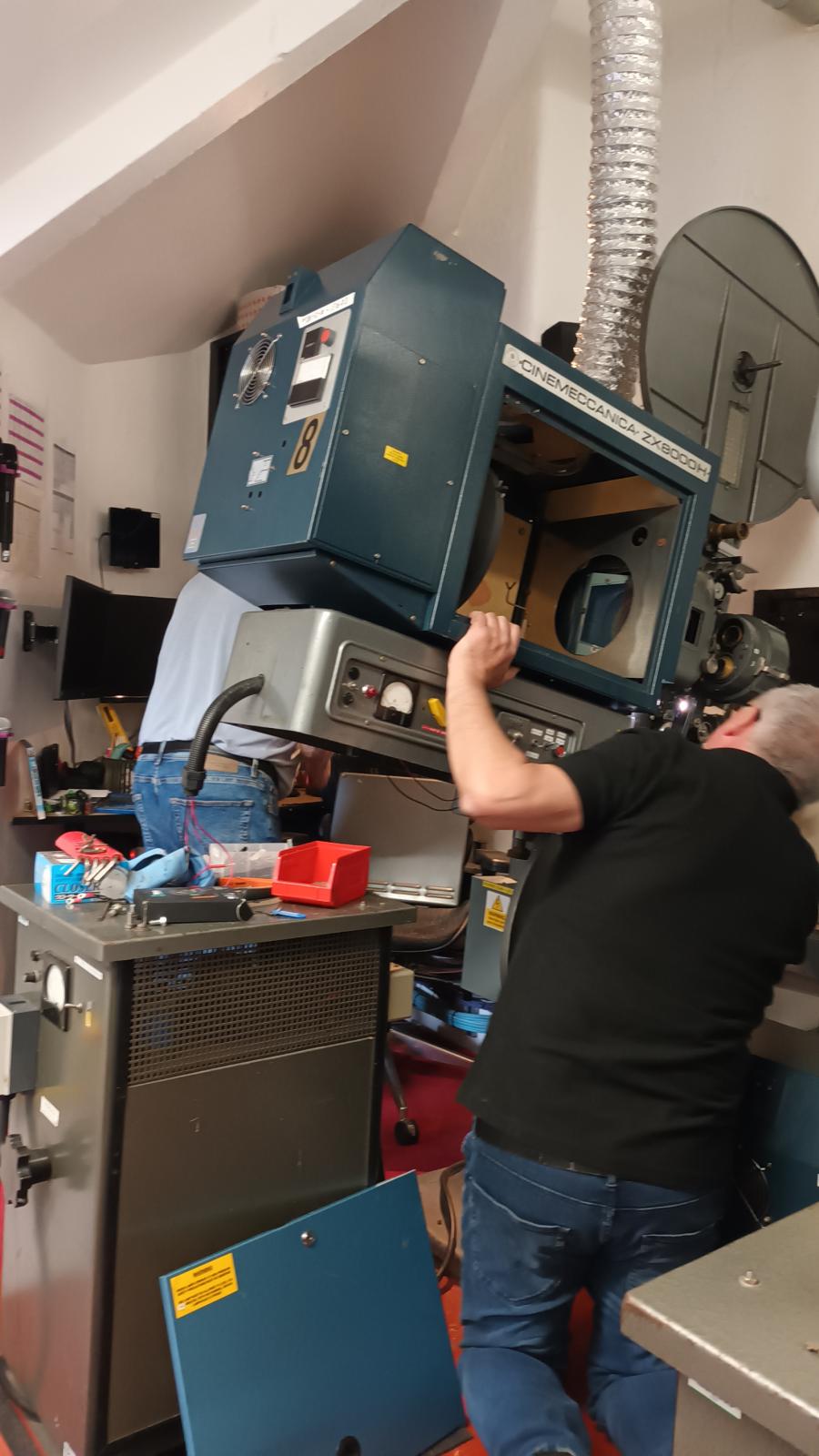
We operate two Cinemeccanica Vic 8 projectors on changeovers. These machines were made in the early 1970s and came to us from the Lounge Cinema in Headingley when it closed in the early 2000s.
When we closed for refurbishment in 2020, the projectors were carefully boxed in while building work continued around them. During the fit-out in 2023, they were reinstated with the help of our cinema technical support company, Omnex.
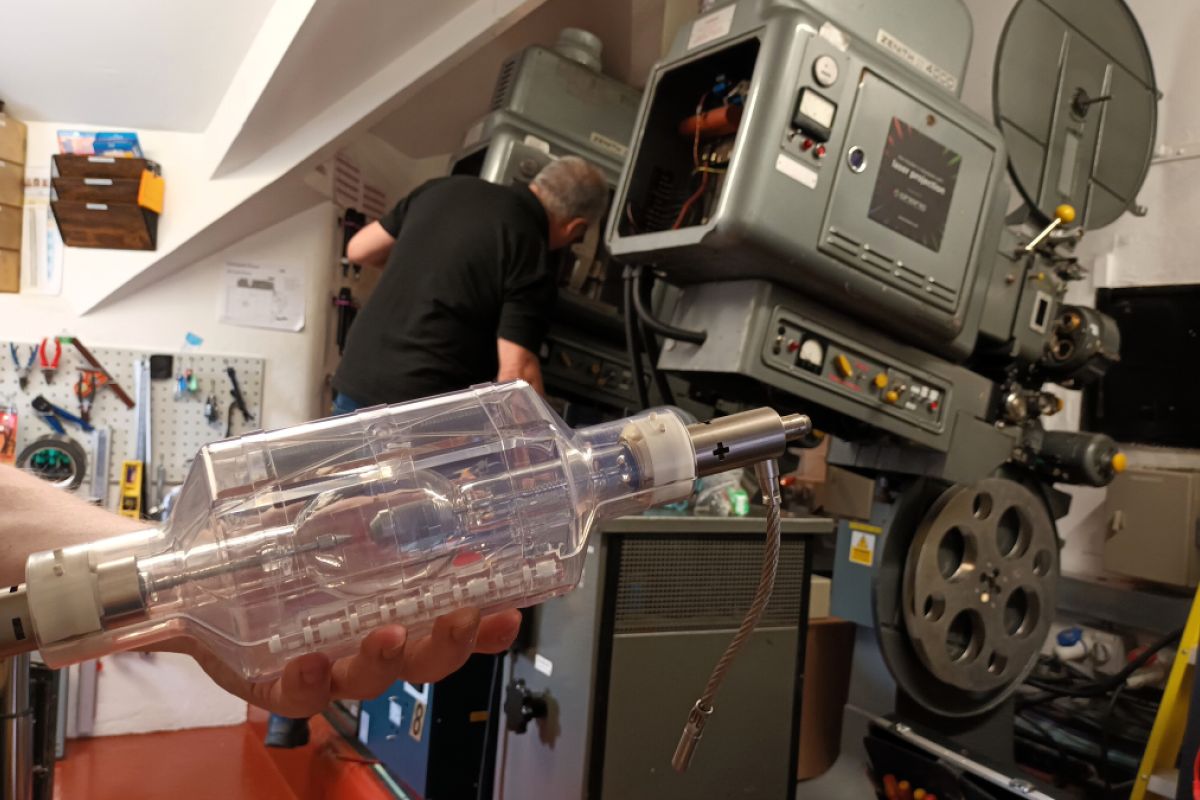
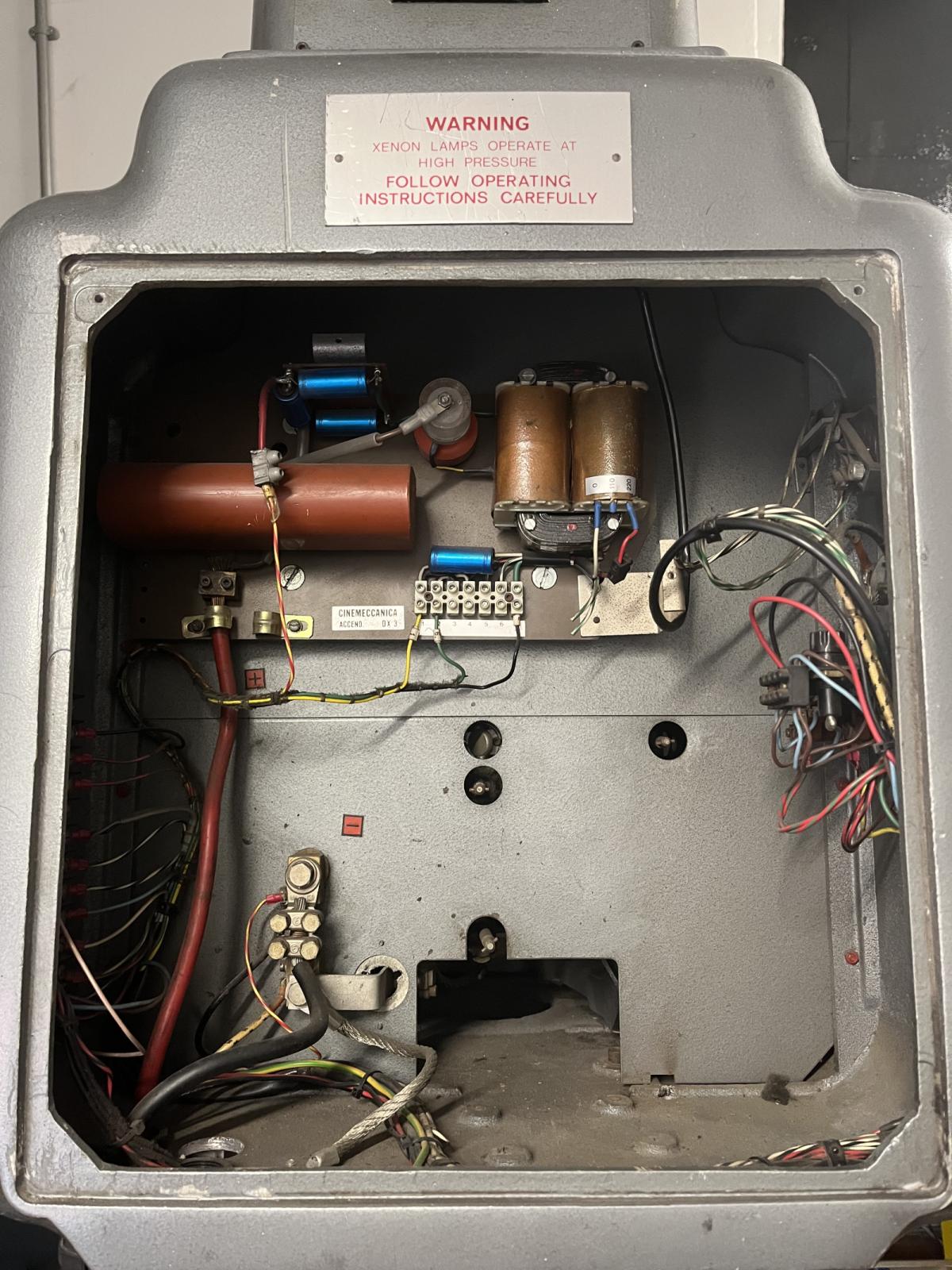
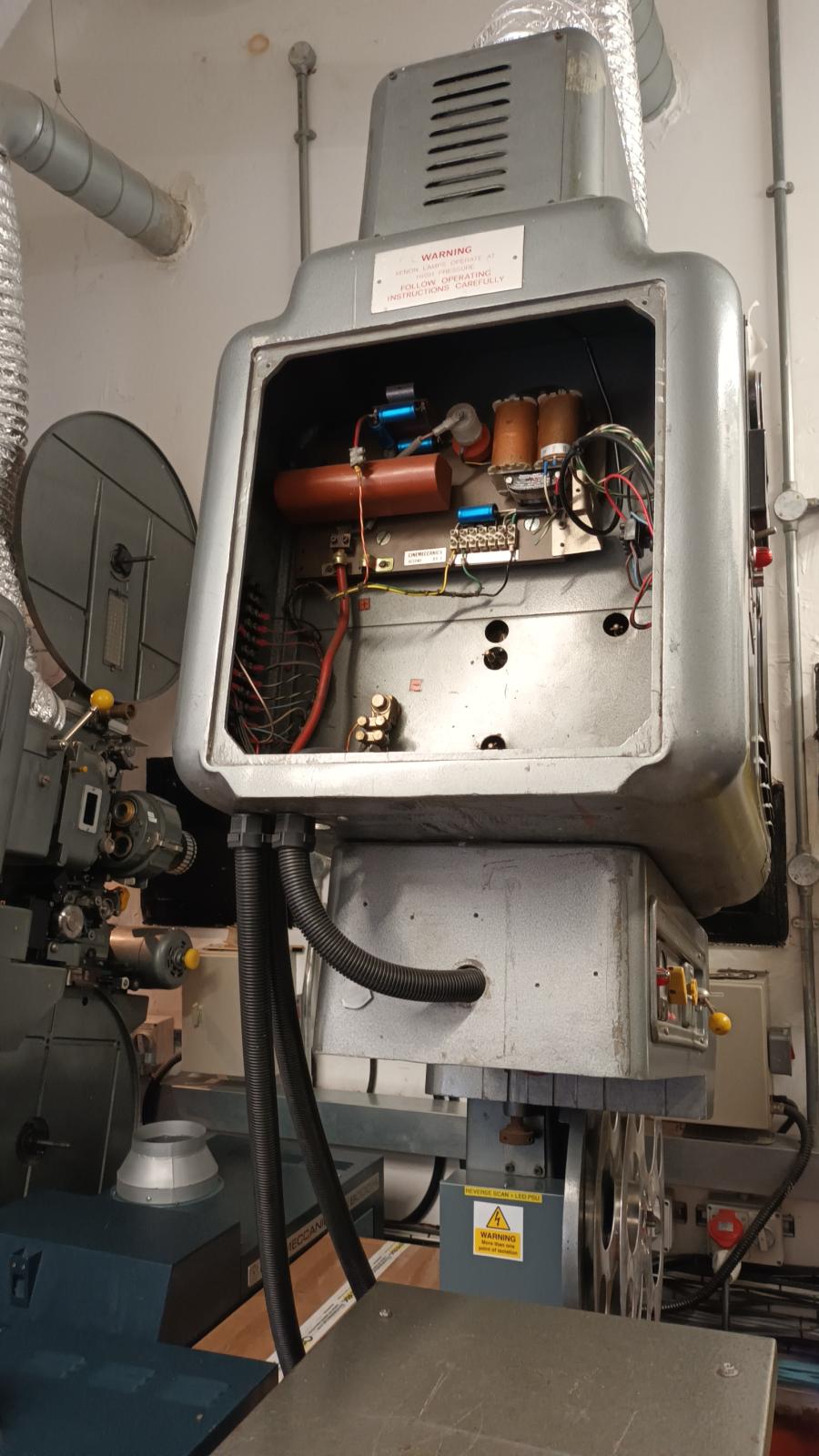
At that point, we realised we had a problem. Light for our projectors is supplied by a xenon bulb housed within a lamphouse, a system also commonly used in digital projectors. In 35mm projection, these bulbs could be oriented either vertically or horizontally, with corresponding differences in lamp and lamphouse design and manufacture. Digital projectors, by contrast, are exclusively horizontal. Because demand for vertically oriented lamps had disappeared, they had ceased to be manufactured. Although our projectors were still fitted with vertical lamps, we were operating with a finite resource that would not last indefinitely.
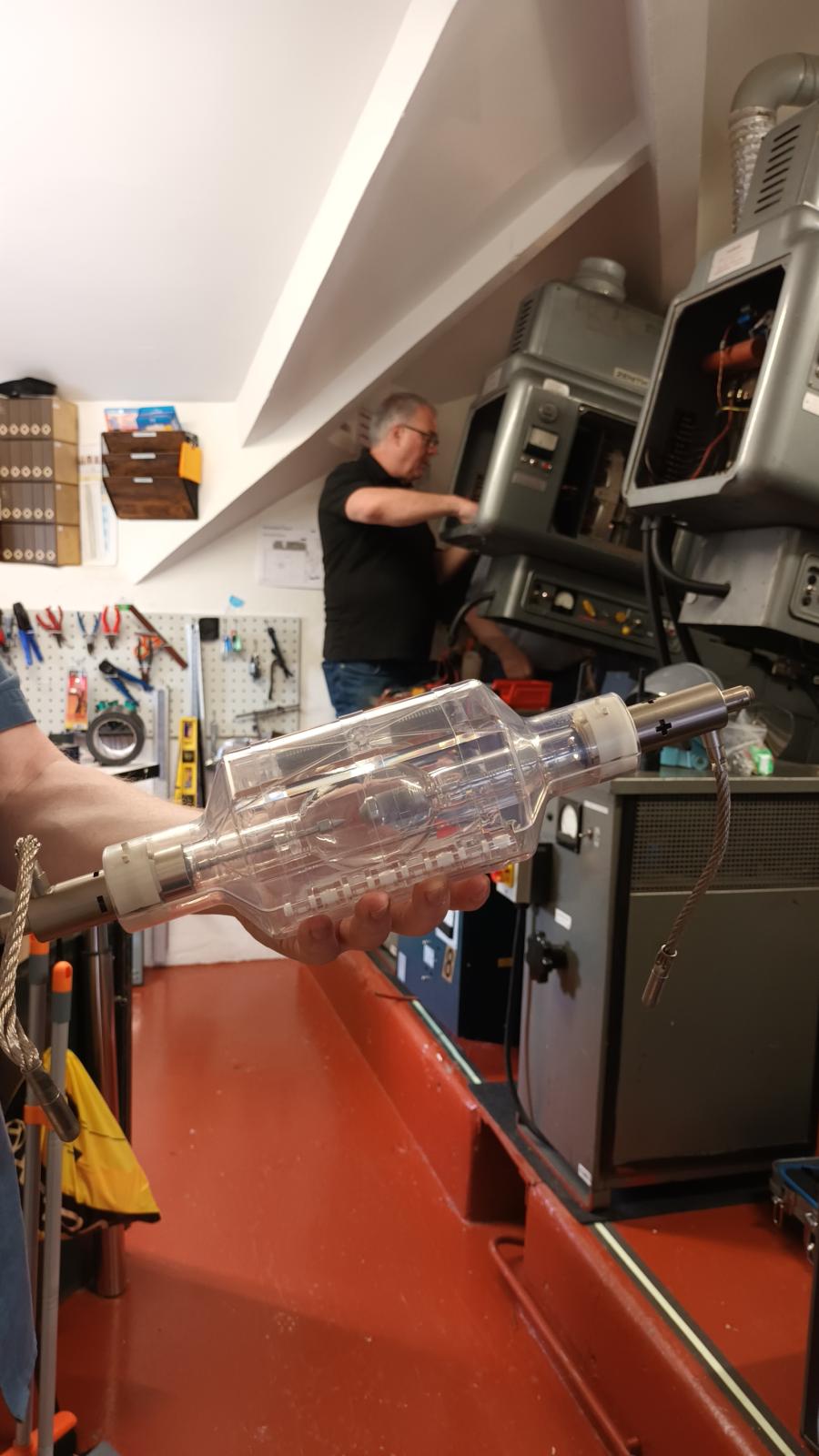
This began a search for replacements. After calling in many favours and making new contacts, we were eventually able to acquire two lamphouses, kindly donated by the Odeon in Southend-on-Sea. These had remained in situ, but unused, since that cinema’s transition to digital projection. Once they arrived in Leeds, we discovered that, despite their outward similarity, they were not a matching pair: they contained mirrors of different sizes. We believe they had come from projectors serving different screens, one running 35mm and the other 70mm from a platter system. This would have created problems for our intended use of two machines on the same screen with changeovers.
Fortunately, our friends at the Projected Picture Trust were willing to help.
The Projected Picture Trust is a group dedicated to preserving the material culture and technical knowledge of cinema exhibition.
With a particular focus on the technologies that create the illusion of life on the screen, the Trust maintains a world-class collection of cinema technology artefacts alongside a growing digital archive. Together, these resources provide an accessible body of knowledge for anyone interested in this often-overlooked aspect of the film industry.
The Projected Picture Trust’s expertise extends beyond collecting equipment. Its volunteers maintain a wide range of working projection and sound systems and can support installations for festivals, exhibitions, and screen-based productions.
With matching mirrors, minor alterations to the internal mounts, and the refurbishment of one or two motors, the lamphouses were ready to install. The work took place over two days in April. Leading the installation was Rob Younger, a member of the Projected Picture Trust, a cinema operator based in Barnsley, and a highly skilled cinema engineer. He was supported by Allan Foster, a former chief projectionist at Hyde Park Picture House and a member of the Trust.
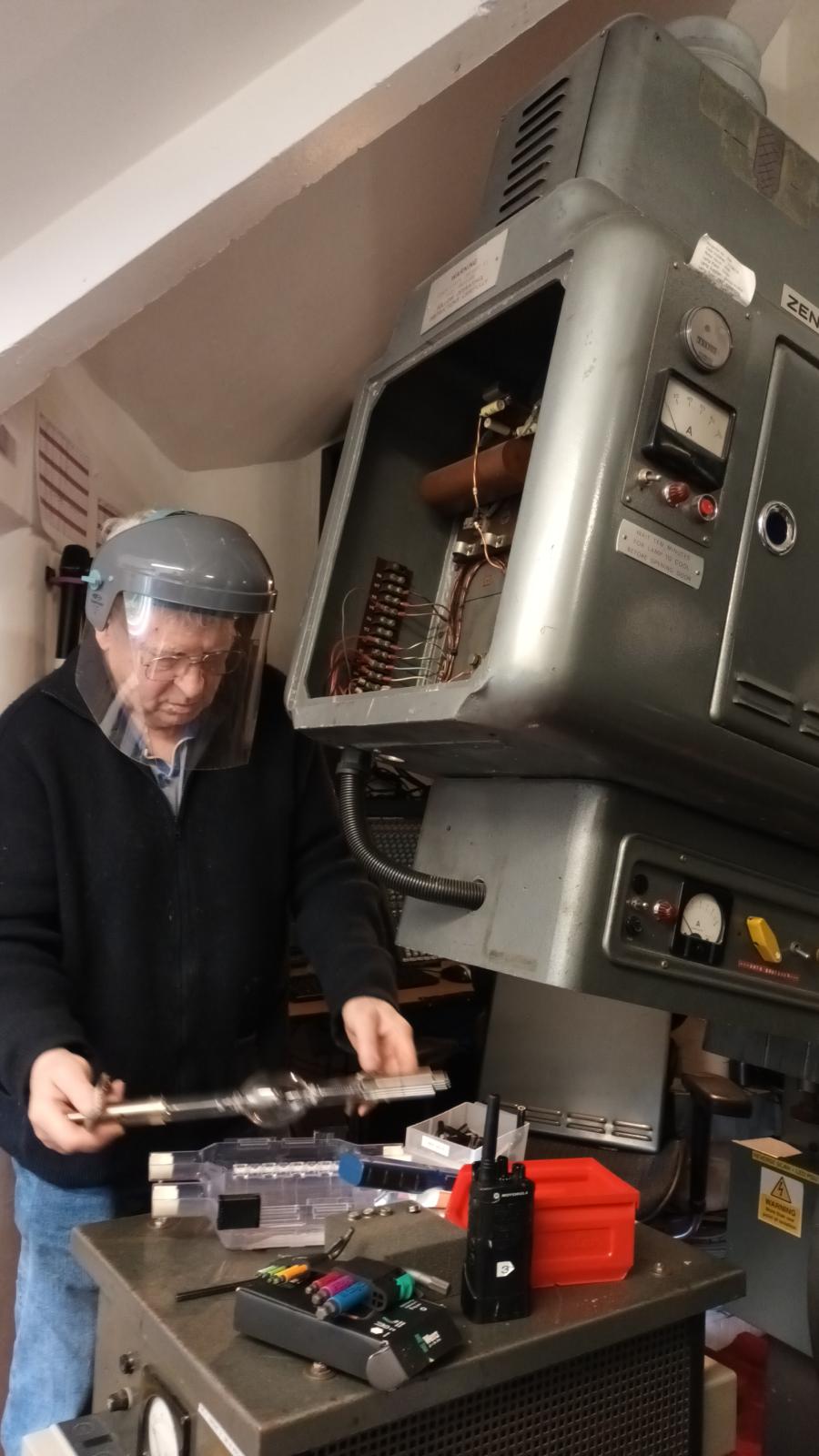
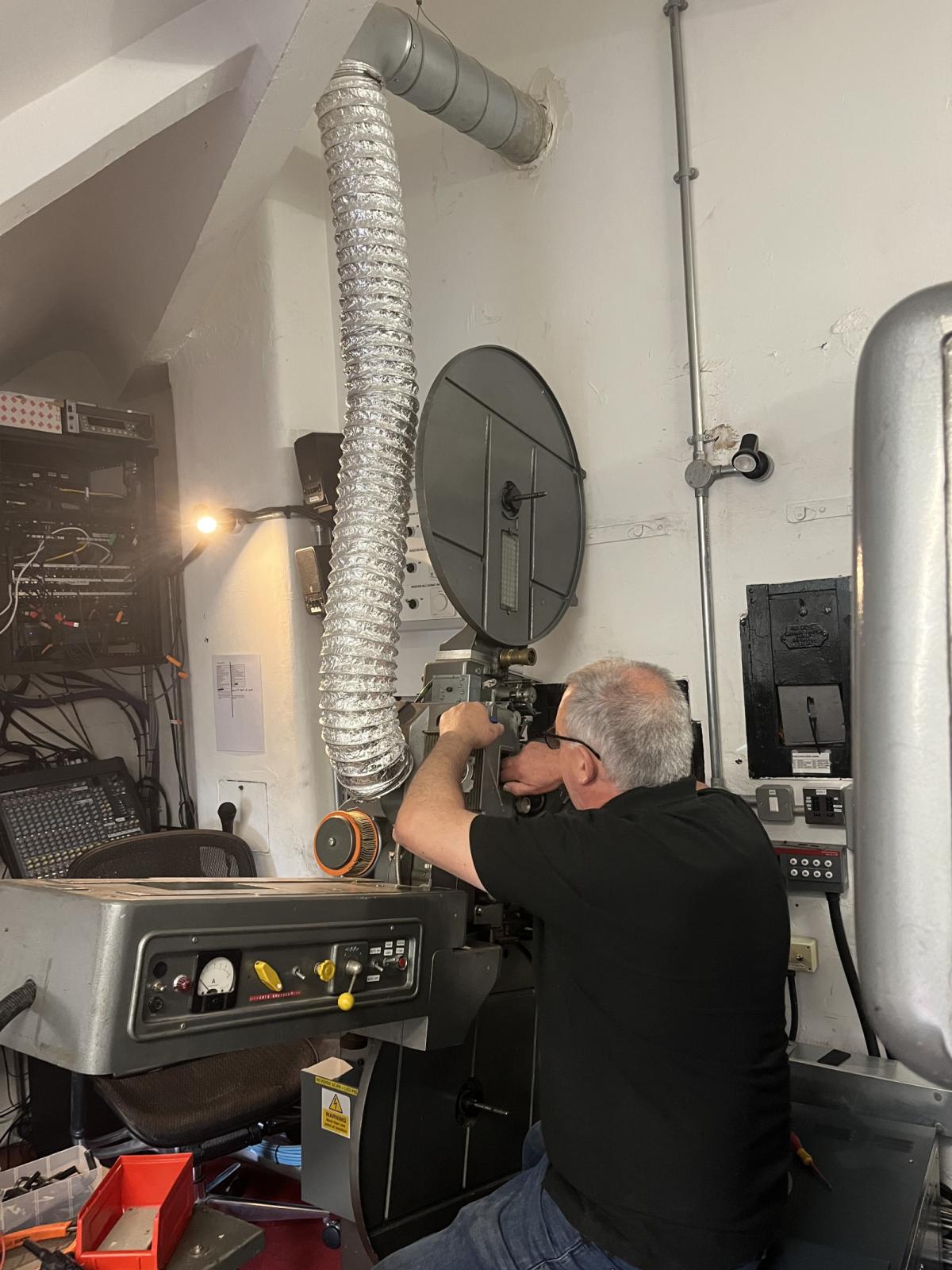
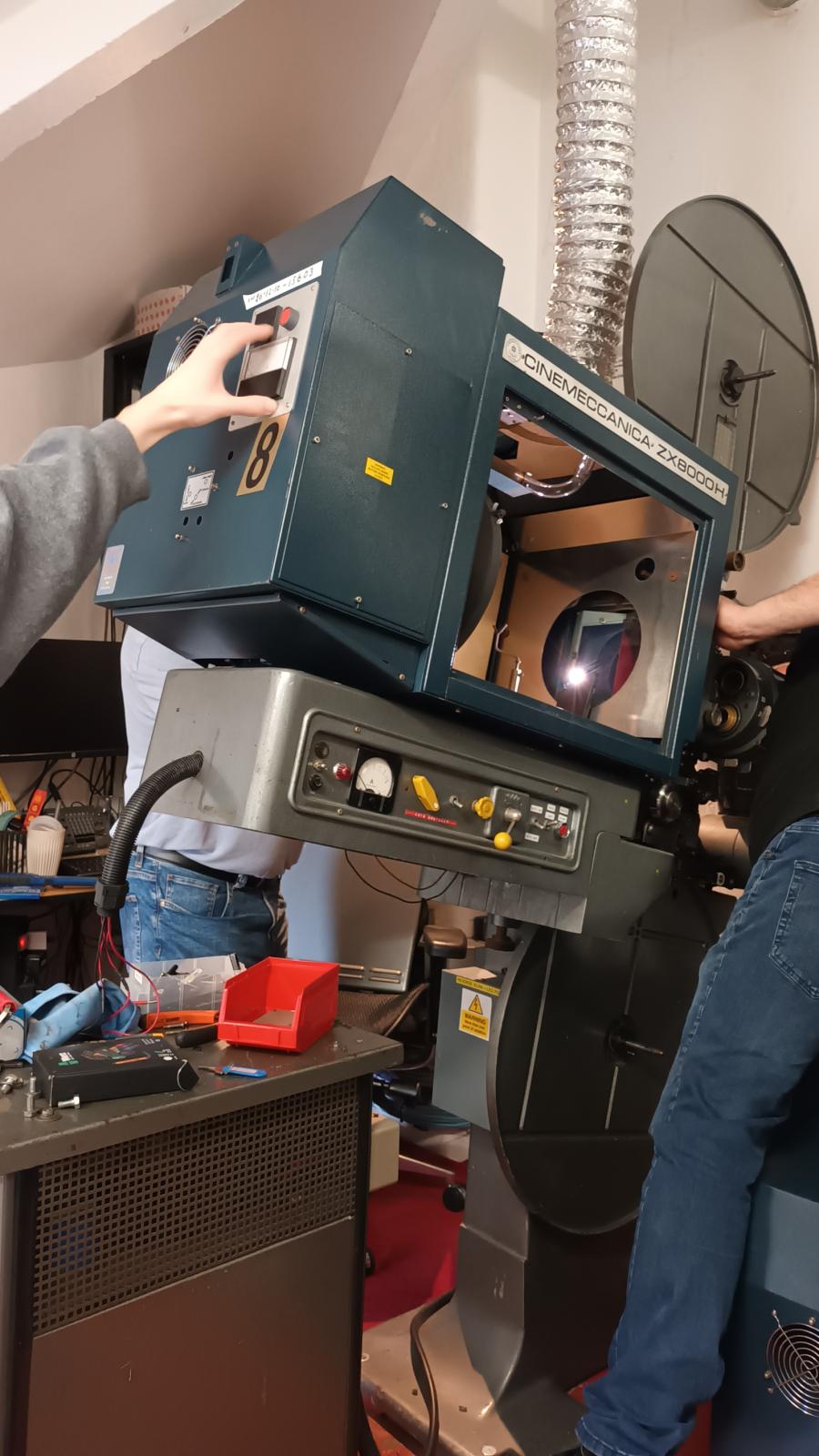
After some careful adjustment, the lamphouses were installed and aligned. With a reliable supply of lamps now secured, we are in a strong position to continue screening films on 35mm. The first screenings to use the new lamphouses will be Rose of Nevada on 6 and 7 June, followed by several screenings of Christopher Nolan’s latest film, The Odyssey, in July.
Although this is a significant step forward for our 35mm programme, the work does not end with the installation of new lamphouses. Training can now begin in earnest for the wider projection team in the operation of 35mm shows. We have also identified replacements for our 1960s T&R rectifiers, which should improve both efficiency and light output. Other priorities include cutting new backing plates to frame the image correctly on the larger screen installed during the refurbishment, and replacing the LEDs used in the sound reader.
While we have been fortunate to be able to make the changes and improvements needed to continue 35mm screenings, and lucky in securing parts and being able to call on outside expertise, there remains a wider challenge across the sector. If analogue exhibition is to survive, the knowledge, skills, and equipment required to sustain it must continue to be maintained, shared, and supported for years to come.
-landscape.jpg)